August 18, 2026 · Clinical Pearl · Cardiomyopathy
What if “Idiopathic” Cardiomyopathy Isn't Really Idiopathic?
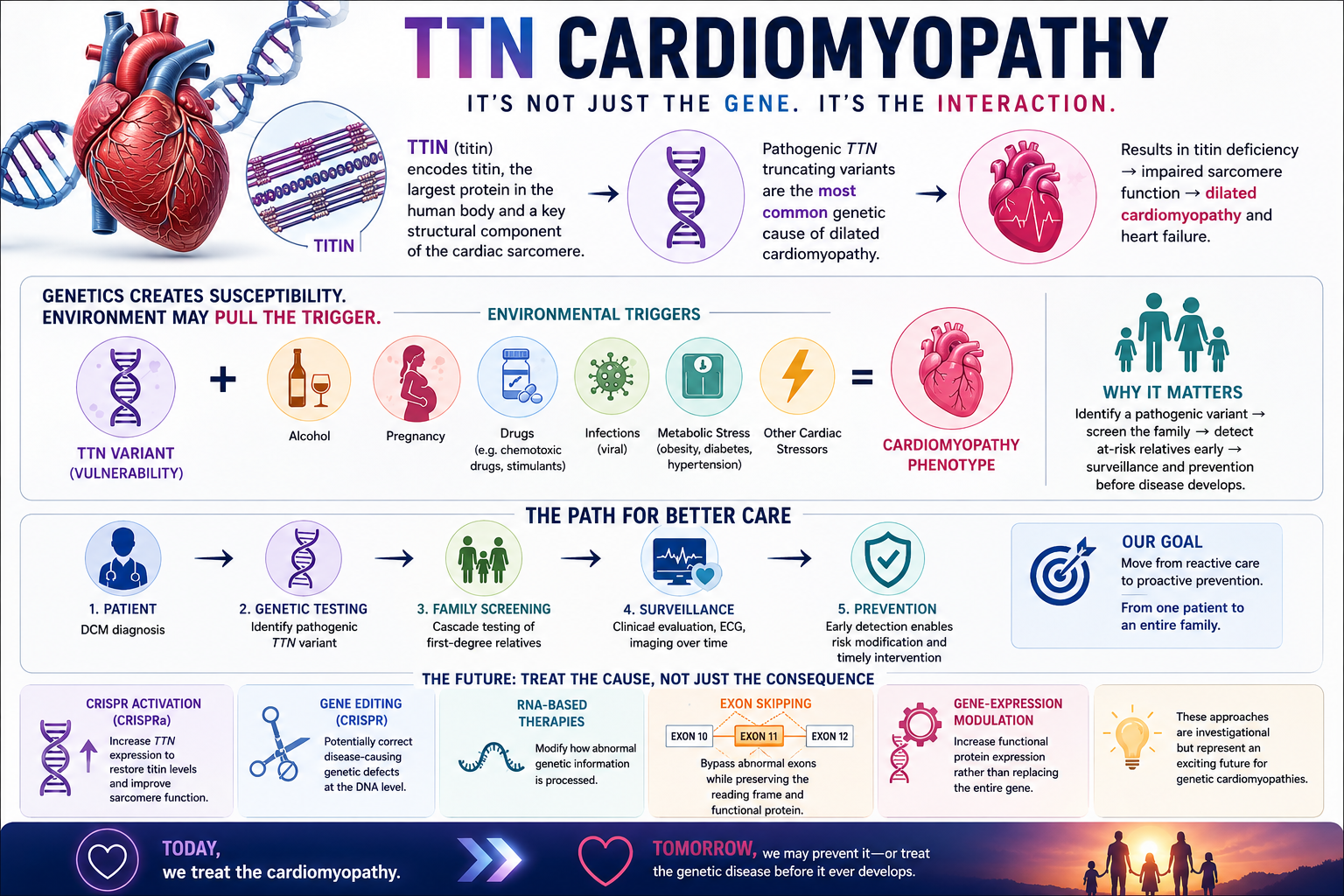
As genetic testing expands in dilated cardiomyopathy, TTN is becoming increasingly important. Genetics creates susceptibility. Environment may determine when—or whether—the disease emerges.
As genetic testing expands in dilated cardiomyopathy (DCM), TTN is becoming increasingly important.
TTN encodes titin, a giant structural protein essential to the cardiac sarcomere. Pathogenic TTN truncating variants are the most common genetic cause of DCM.
But having the gene may only be part of the story.
A pathogenic TTN variant can create myocardial vulnerability, while pregnancy, alcohol, cardiotoxic chemotherapy, or other cardiac stressors may act as a 'second hit' that unmasks the cardiomyopathy.
Genetics creates susceptibility. Environment may determine when—or whether—the disease emerges.
This has important implications for how we evaluate DCM.
Identifying a pathogenic variant doesn't just provide an explanation for one patient's cardiomyopathy. It can lead to family screening and surveillance, potentially identifying relatives at risk before symptoms or LV dysfunction develop.
And what about the future?
Researchers are exploring ways to treat the underlying genetic disease itself:
• CRISPR activation — increasing expression of TTN to restore titin levels
• Gene editing — potentially correcting selected disease-causing genetic defects
• RNA-based therapies — modifying how abnormal genetic information is processed
• Exon skipping — bypassing selected abnormal portions of a gene while preserving functional protein
• Gene-expression modulation — increasing functional protein rather than replacing the entire gene
These approaches remain investigational, but they point toward an exciting change in how we may eventually think about inherited cardiomyopathy.
Phenotype → Genotype → Family Screening → Prevention → Precision Therapy
Today, we treat the cardiomyopathy.
Tomorrow, we may be treating the genetic defect before cardiomyopathy ever develops.
#Cardiomyopathy #HeartFailure #TTN #Genetics #CRISPR #GeneTherapy #GeneticTesting #PrecisionMedicine #CardiovascularGenetics
Important notice
This content is for educational purposes only and is not medical advice for any individual patient. Patients should discuss diagnosis and treatment decisions with their own physician, or request a clinical consultation.