August 20, 2026 · Clinical Pearl · Cardiomyopathy
Cardiomyopathy: To Exercise or Not to Exercise?
For years, patients diagnosed with cardiomyopathy were often given a simple recommendation: 'Don't exercise.' That message is changing. For many patients with cardiomyopathy, exercise is not only possible—it can be beneficial. The key is determining the right type, the right amount, for the right person.
For years, patients diagnosed with cardiomyopathy were often given a simple recommendation: 'Don't exercise.'
That message is changing.
For many patients with cardiomyopathy, exercise is not only possible—it can be beneficial. The key is determining the right type, the right amount, for the right person.
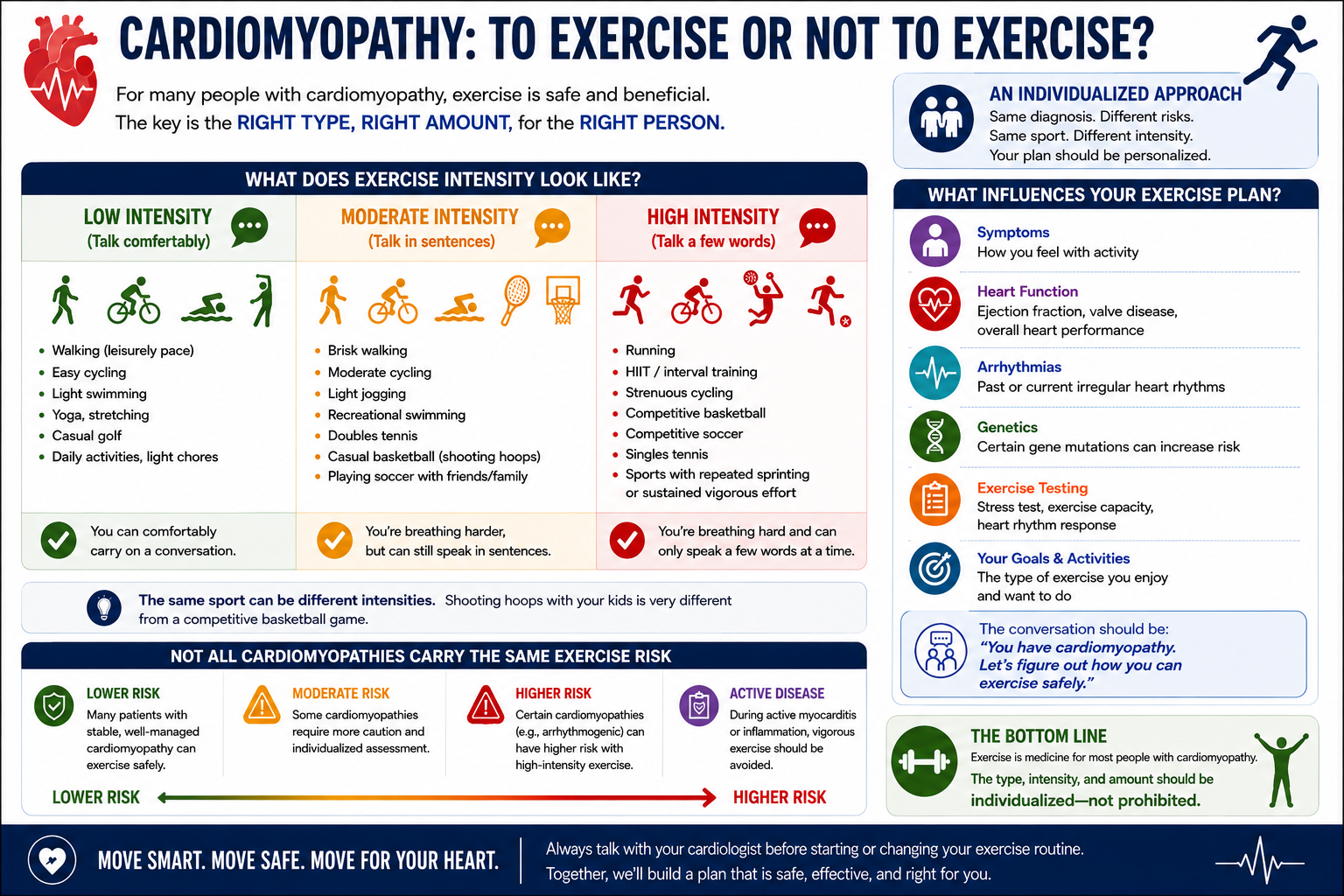
A simple way to think about intensity:
🟢 Low intensity
Walking, casual golf, easy cycling, light swimming, yoga, stretching, daily activities, and light chores.
You can comfortably carry on a conversation.
🟡 Moderate intensity
Brisk walking, moderate cycling, doubles tennis, recreational swimming, light jogging, casually shooting hoops or kicking a soccer ball around.
You're breathing harder, but can still speak in sentences.
🔴 High intensity
Running, HIIT, strenuous cycling, competitive basketball, competitive soccer, singles tennis, or other sports involving repeated sprinting and sustained vigorous effort.
You're breathing hard and can only speak a few words at a time.
Not every cardiomyopathy carries the same exercise risk.
Many patients with stable hypertrophic or dilated cardiomyopathy can exercise safely with appropriate guidance. In arrhythmogenic cardiomyopathy, however, repeated high-intensity exercise may increase arrhythmias and contribute to progression of the disease.
And even two people with the same cardiomyopathy may receive different recommendations.
We need to consider:
• Symptoms — how you feel with activity
• Heart function — ejection fraction, valve disease, and overall heart performance
• Arrhythmias — past or current irregular heart rhythms
• Genetics — certain gene mutations can increase risk
• Exercise testing — stress test, exercise capacity, and heart rhythm response
• The activity the patient wants to do
The modern conversation shouldn't be: 'You have cardiomyopathy. Don't exercise.'
It should be: 'You have cardiomyopathy. Let's figure out how you can exercise safely.'
Exercise in cardiomyopathy should be individualized—not automatically restricted.
#Cardiomyopathy #Exercise #Cardiology #SportsCardiology #HeartFailure #HCM #ARVC #HeartHealth
Important notice
This content is for educational purposes only and is not medical advice for any individual patient. Patients should discuss diagnosis and treatment decisions with their own physician, or request a clinical consultation.