August 21, 2026 · Clinical Pearl · Cardiomyopathy
Alcoholic Cardiomyopathy: When Is It Reversible?
Alcoholic cardiomyopathy is an important reminder that a very low EF does not always mean permanent heart damage.
Alcoholic cardiomyopathy is an important reminder that a very low EF does not always mean permanent heart damage.
Chronic heavy alcohol exposure can progressively injure the myocardium:
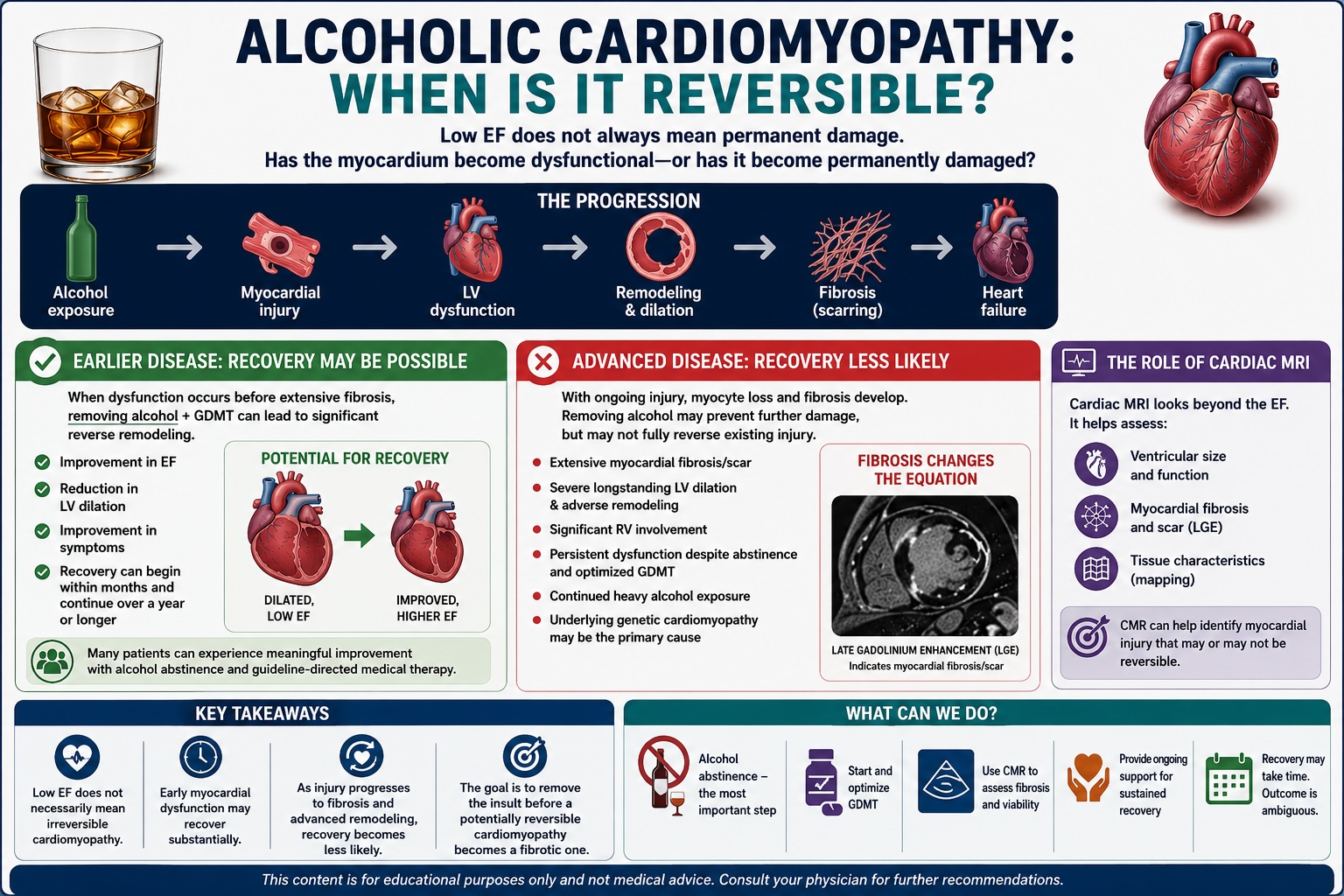
Alcohol exposure → myocardial injury → LV dysfunction → remodeling → fibrosis → heart failure
But there may be an important window for recovery.
🟢 Earlier disease: Recovery may be possible
When myocardial dysfunction occurs before extensive fibrosis develops, stopping alcohol can lead to significant reverse remodeling.
With alcohol abstinence + guideline-directed medical therapy (GDMT), we can see:
Improvement in EF
Reduction in LV dilation
Improvement in symptoms
Sometimes dramatic myocardial recovery
Recovery may begin within months and can continue over a year or longer.
🔴 Advanced disease: Recovery becomes less likely
As alcohol exposure continues, repeated myocardial injury can lead to myocyte loss and fibrosis.
Once significant fibrosis and advanced ventricular remodeling are present, removing alcohol may prevent additional injury—but it may not completely reverse the damage.
This is where cardiac MRI can be particularly helpful.
MRI allows us to look beyond the EF and assess myocardial tissue, including evidence of fibrosis/scar.
One more important consideration: genetics
Not every patient with heavy alcohol use and a dilated cardiomyopathy has a purely "alcohol-induced" cardiomyopathy.
Some patients may have an underlying genetic predisposition to dilated cardiomyopathy, with alcohol acting as a second hit that brings the disease to the surface.
The takeaway
Low EF does not necessarily mean irreversible cardiomyopathy.
The bigger question may be:
How much viable myocardium remains—and how much has already been replaced by fibrosis?
Recognize alcohol-related cardiomyopathy early.
Stop the myocardial insult.
Start and optimize GDMT.
Consider CMR and genetic evaluation when appropriate.
The earlier we intervene, the greater the opportunity for myocardial recovery.
#HeartFailure #Cardiomyopathy #Cardiology #CardiacMRI #GDMT #HeartRecovery #AlcoholAwareness
Important notice
This content is for educational purposes only and is not medical advice for any individual patient. Patients should discuss diagnosis and treatment decisions with their own physician, or request a clinical consultation.