August 14, 2026 · Clinical Pearl · HFrEF
External Wearable Defibrillators (Vests) May Be Changing the ICD Timeline
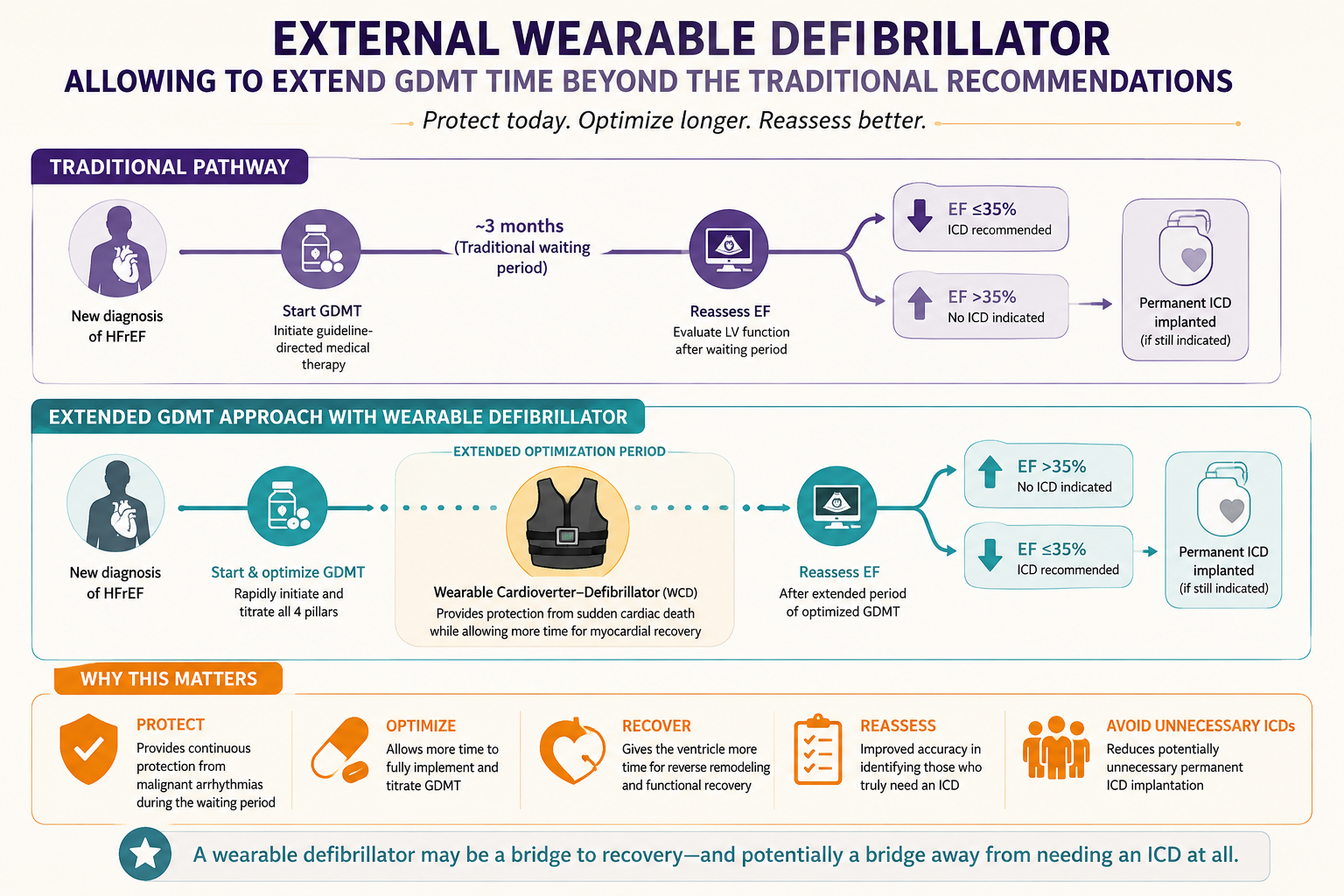
For decades, patients with newly diagnosed HFrEF have faced a relatively rigid timeline: GDMT, reassess LV function after a defined waiting period, and if the EF remains severely reduced, consider a primary prevention ICD.
For decades, patients with newly diagnosed HFrEF have faced a relatively rigid timeline: GDMT, reassess LV function after a defined waiting period, and if the EF remains severely reduced, consider a primary prevention ICD.
But heart failure therapy has changed.
With contemporary quadruple GDMT, ventricular recovery may continue well beyond the traditional reassessment window. The challenge has always been what to do about sudden cardiac death risk while we wait for recovery.
This is where the wearable cardioverter-defibrillator (WCD) may have an important role.
A WCD can provide temporary protection from malignant ventricular arrhythmias while giving clinicians additional time to:
• Rapidly initiate and optimize all four pillars of GDMT
• Allow reverse remodeling to occur
• Reassess EF after adequate medical therapy
• Avoid potentially unnecessary permanent ICD implantation in patients whose EF ultimately recovers
The concept is increasingly important: protect the patient while giving the ventricle time to declare itself.
Rather than viewing the traditional ICD waiting period as an automatic endpoint, selected patients may benefit from a more individualized approach, particularly when GDMT has only recently been optimized and meaningful myocardial recovery remains plausible.
The wearable defibrillator may therefore be more than a bridge to an ICD. For some patients, it may be a bridge to recovery and potentially a bridge away from needing an ICD at all.
#HeartFailure #HFrEF #GDMT #SuddenCardiacDeath #ICD #WearableDefibrillator #Cardiology #HeartFailureCare
Important notice
This content is for educational purposes only and is not medical advice for any individual patient. Patients should discuss diagnosis and treatment decisions with their own physician, or request a clinical consultation.