August 12, 2026 · Perspective · Systems of Care
The Missing Link in Heart Failure Care: Social Work
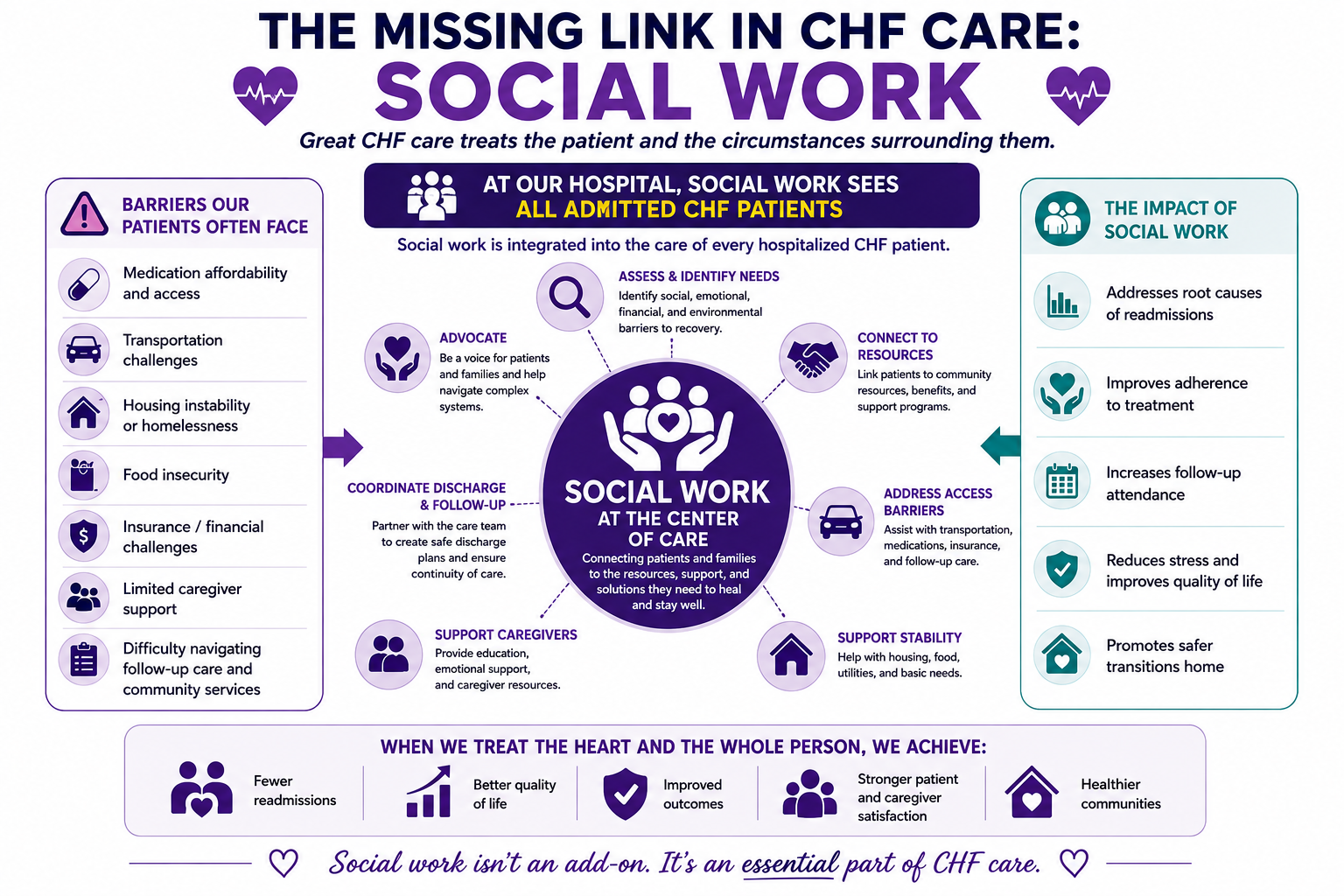
Great CHF care treats the patient and the circumstances surrounding them.
Heart failure care does not end with diuretics, GDMT, and a discharge prescription. For many hospitalized patients, the biggest barriers to recovery exist outside the hospital room: medication affordability, transportation, housing instability, food insecurity, insurance challenges, limited caregiver support, and difficulty navigating follow-up care.
At Sharp Chula Vista Medical Center, social work is integrated into our heart failure program, with our admitted CHF patients seen by social work as part of their multidisciplinary care. Social workers are recognized components of the program, helping address transitions of care, resource navigation, and housing insecurity.
Why? Because a prescription is only effective if the patient can actually obtain it. A follow-up appointment only works if the patient can get there. And a discharge plan only succeeds if it makes sense in the reality of that patient's life.
Our social workers help bridge that gap, connecting patients with resources, identifying social and financial barriers, supporting families, and helping create a safer transition from hospital to home.
We can optimize the heart. Social workers help us optimize the environment the patient returns to.
That is why social work isn't an accessory to heart failure care. It is an essential part of it.
#HeartFailure #SocialWork #CHF #TransitionsOfCare #HealthEquity #SDOH #PatientCare #MultidisciplinaryCare #HospitalMedicine #HeartFailureManagement
Important notice
This content is for educational purposes only and is not medical advice for any individual patient. Patients should discuss diagnosis and treatment decisions with their own physician, or request a clinical consultation.