August 6, 2026 · Perspective · HFpEF
Obesity and HFpEF: Transforming Care with Cardiometabolic Therapy
Heart failure with preserved ejection fraction (HFpEF) remains one of the greatest challenges in cardiovascular medicine, and obesity is increasingly recognized as one of its most important drivers.
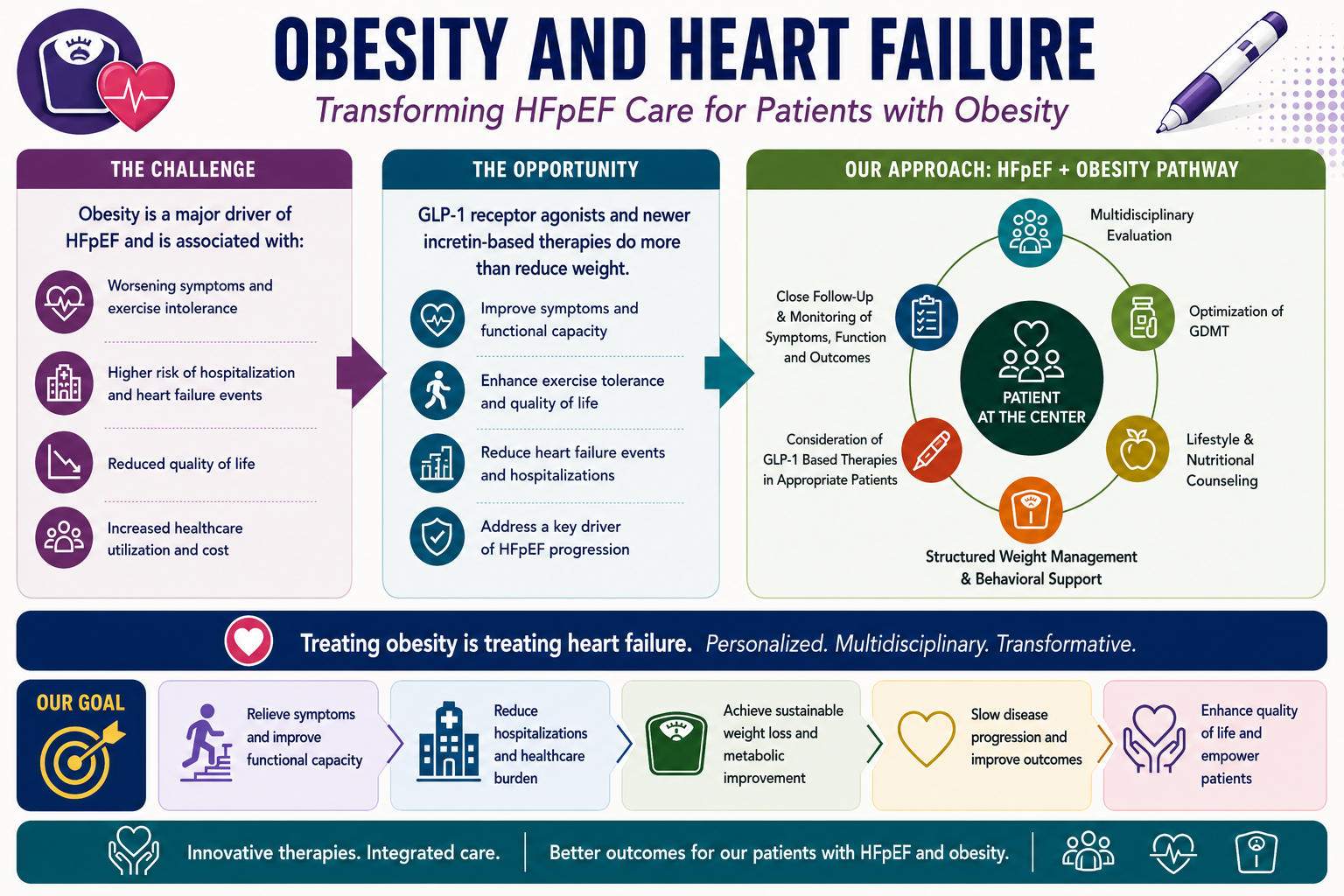
Obesity contributes to reduced exercise capacity, recurrent hospitalizations, and poorer quality of life in patients with HFpEF.
The emergence of GLP-1 receptor agonists and newer incretin-based therapies is changing the way we think about HFpEF. In carefully selected patients with obesity, these therapies have demonstrated improvements in symptoms, functional capacity, quality of life, and reductions in heart failure events. Treating obesity is becoming an integral part of treating heart failure.
At Sharp Chula Vista Medical Center, our multidisciplinary HFpEF program identifies patients with obesity who may benefit from comprehensive cardiometabolic management through multidisciplinary evaluation, guideline-directed medical therapy optimization, lifestyle and nutritional counseling, structured weight management, consideration of GLP-1 based therapies in appropriate patients, and longitudinal follow-up to monitor symptoms, functional capacity, and clinical outcomes.
Heart failure care is evolving beyond simply managing congestion. By addressing obesity as a key disease modifier, we have an opportunity to improve both longevity and quality of life for our patients.
Important notice
This content is for educational purposes only and is not medical advice for any individual patient. Patients should discuss diagnosis and treatment decisions with their own physician, or request a clinical consultation.