Clinical Pearl · Right Heart Failure
Cardiac Cirrhosis: Are We Paying Enough Attention to the Liver in Heart Failure?
We routinely follow kidney function in patients with heart failure. But how often do we look for the consequences of chronic hepatic congestion?
We routinely follow kidney function in patients with heart failure. But how often do we look for the consequences of chronic hepatic congestion?
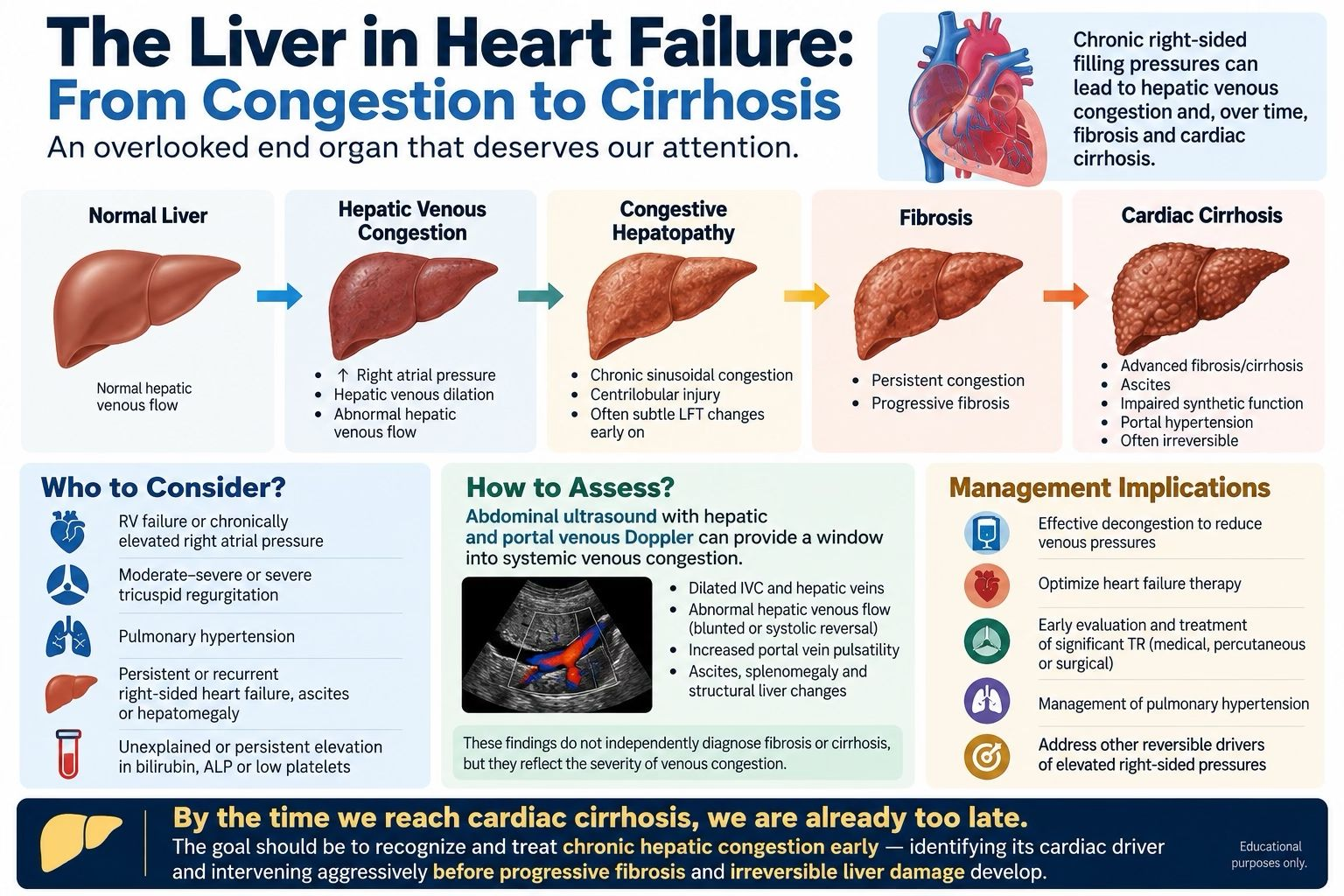
In patients with right ventricular failure, severe tricuspid regurgitation, or pulmonary hypertension with elevated right-sided pressures, persistent venous congestion can lead to congestive hepatopathy—and over time, hepatic fibrosis and cardiac cirrhosis.
Normal liver enzymes do not exclude significant hepatic congestion.
This is part of the cardiohepatic syndrome: cardiac dysfunction affecting the liver through venous congestion and impaired perfusion.
Should we have a lower threshold for targeted abdominal ultrasound with hepatic and portal vein Doppler in patients with persistent right-sided congestion, recurrent ascites, or unexplained liver abnormalities?
These studies can help characterize congestion, although Doppler abnormalities do not establish fibrosis, and congestion itself can increase liver stiffness.
Recognizing hepatic involvement should prompt us to reassess treatment:
• Achieve effective, sustained decongestion.
• Optimize heart failure therapy—including remote volume monitoring devices such as implantable PA pressure monitors.
• Address the underlying RV dysfunction, pulmonary hypertension, or severe TR.
• Consider timely valve intervention—including tricuspid TEER—or advanced heart failure evaluation when appropriate.
• Collaborate with hepatology when liver disease persists or its cause is uncertain.
By the time cardiac cirrhosis develops, we may have missed an earlier opportunity to intervene.
The goal should be to recognize and treat chronic hepatic congestion before advanced liver damage develops.
Are we giving the liver the same attention we give the kidneys in heart failure?
#HeartFailure #CardiohepaticSyndrome #CongestiveHepatopathy #RightHeartFailure #TricuspidRegurgitation #Cardiology
Important notice
This content is for educational purposes only and is not medical advice for any individual patient. Patients should discuss diagnosis and treatment decisions with their own physician, or request a clinical consultation.