Perspective · Cardiac Devices
Beyond the Four Pillars: Is Cardiac Modulation the Next Frontier in Heart Failure?
Beyond GDMT’s four pillars, a different device approach is gaining attention: modulating cardiac physiology rather than replacing or mechanically supporting the failing heart.
Despite remarkable advances in GDMT, many patients with heart failure remain symptomatic. While traditional device therapies have focused on defibrillation, resynchronization, and mechanical circulatory support, a different approach is gaining attention: modulating cardiac physiology rather than replacing or mechanically supporting the failing heart.
Two FDA-approved technologies are leading this field: 1. BAROSTIM (CVRx) — Autonomic Modulation: Stimulates the carotid baroreflex, reducing sympathetic outflow and improving autonomic balance. The BeAT-HF trial demonstrated improvements in exercise capacity, quality of life, and NT-proBNP in selected patients with HFrEF. 2. OPTIMIZER (Impulse Dynamics) — Cardiac Contractility Modulation (CCM): Delivers electrical impulses during the myocardial absolute refractory period, influencing intracellular calcium handling and excitation–contraction coupling without triggering additional heartbeats. The FIX-HF-5C trial demonstrated improvements in exercise tolerance, functional status, and quality of life.
Importantly, neither therapy has demonstrated a definitive mortality benefit. Their established clinical value lies primarily in improving symptoms, exercise capacity, and quality of life in appropriately selected patients.
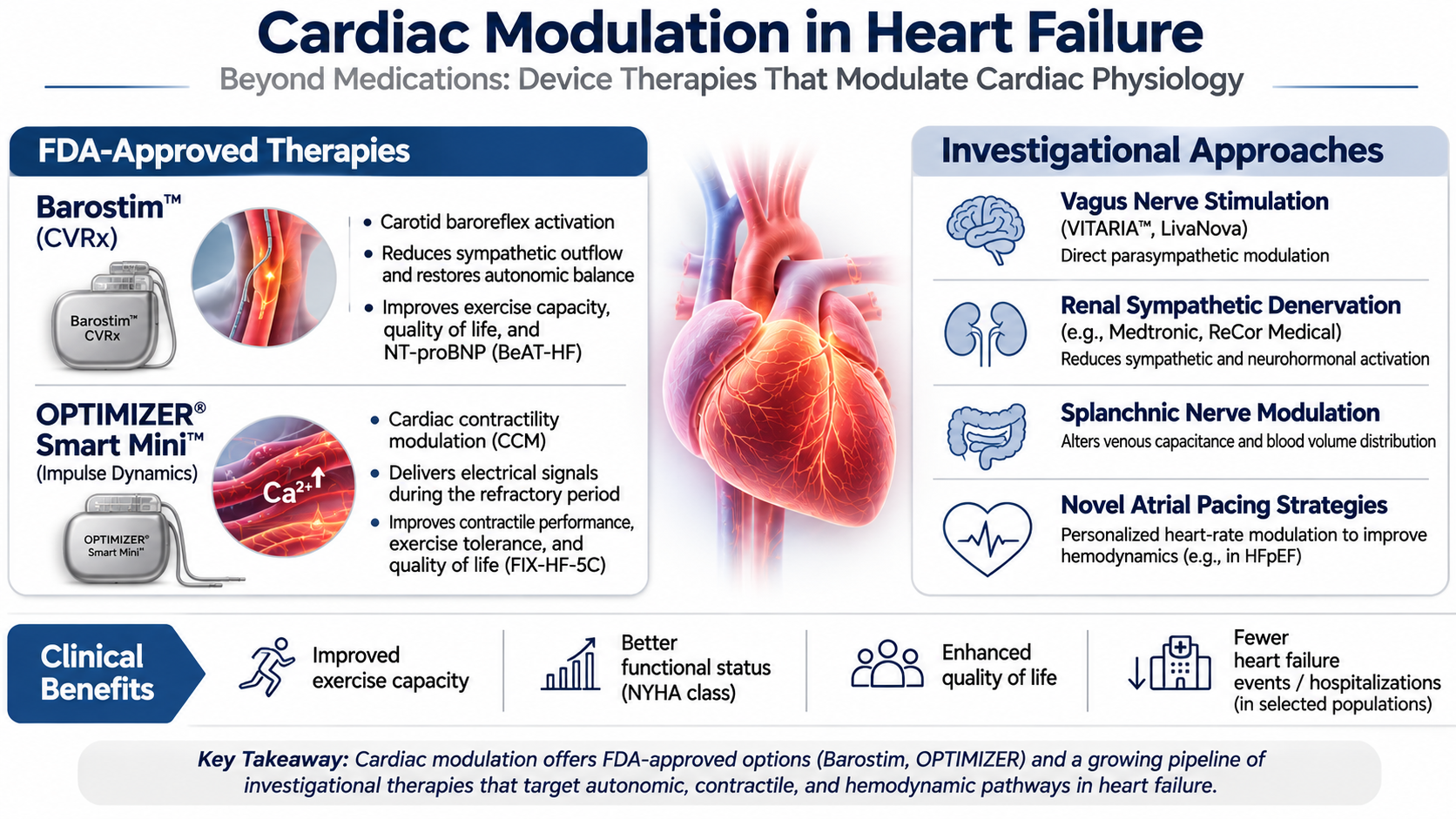
But cardiac modulation is evolving beyond these two technologies. Several investigational approaches are targeting additional physiological pathways: 1. Vagus Nerve Stimulation (VITARIA, LivaNova): Direct autonomic modulation aimed at restoring parasympathetic activity and reducing sympathetic overactivation. Clinical outcome benefits remain unproven. 2. Renal Sympathetic Denervation (Medtronic, ReCor Medical): Targets sympathetic signaling and neurohormonal activation. FDA-approved devices exist for hypertension, but this approach remains investigational for HF. 3. Splanchnic Nerve Modulation: Targets venous capacitance and redistribution of stressed blood volume to potentially reduce cardiac filling pressures, particularly in HFpEF. Randomized evidence has not established clinical benefit. 4. Novel Atrial Pacing Strategies: Investigating personalized heart-rate modulation to improve hemodynamics, functional capacity, and symptoms in selected HFpEF phenotypes.
The Bigger Question We now have technologies capable of modifying autonomic signaling, myocardial contractility, and cardiovascular hemodynamics without conventional mechanical circulatory support.
But can these interventions move beyond symptomatic improvement to reduce HF hospitalizations, reverse adverse remodeling, and ultimately improve survival?
Symptom relief and improved quality of life are meaningful outcomes in their own right. However, widespread adoption will require careful patient selection, long-term safety data, and stronger clinical outcome evidence.
Could cardiac modulation eventually become a fifth pillar of heart failure treatment, or will it remain a valuable adjunct for selected symptomatic patients?
For professional education and scientific discussion only. Not individualized medical advice.
#HeartFailure #HFrEF #HFpEF #CardiacModulation #CardiacContractilityModulation #CCM #Barostim #CVRx #OPTIMIZER #OptimizerSmartMini #ImpulseDynamics #VITARIA #LivaNova #VagusNerveStimulation #RenalDenervation #Medtronic #ReCorMedical #SplanchnicNerveModulation #Neuromodulation #MedicalDevices #MedTech #HeartFailureInnovation #Cardiology
Important notice
This content is for educational purposes only and is not medical advice for any individual patient. Patients should discuss diagnosis and treatment decisions with their own physician, or request a clinical consultation.