Clinical Pearl · Cardiac Devices
TAVR, TEER, WATCHMAN: Who Needs Antibiotic Prophylaxis?
As structural heart procedures become increasingly common, this question comes up frequently—especially before dental work. TAVR, TEER, or WATCHMAN: the answers are not all the same.
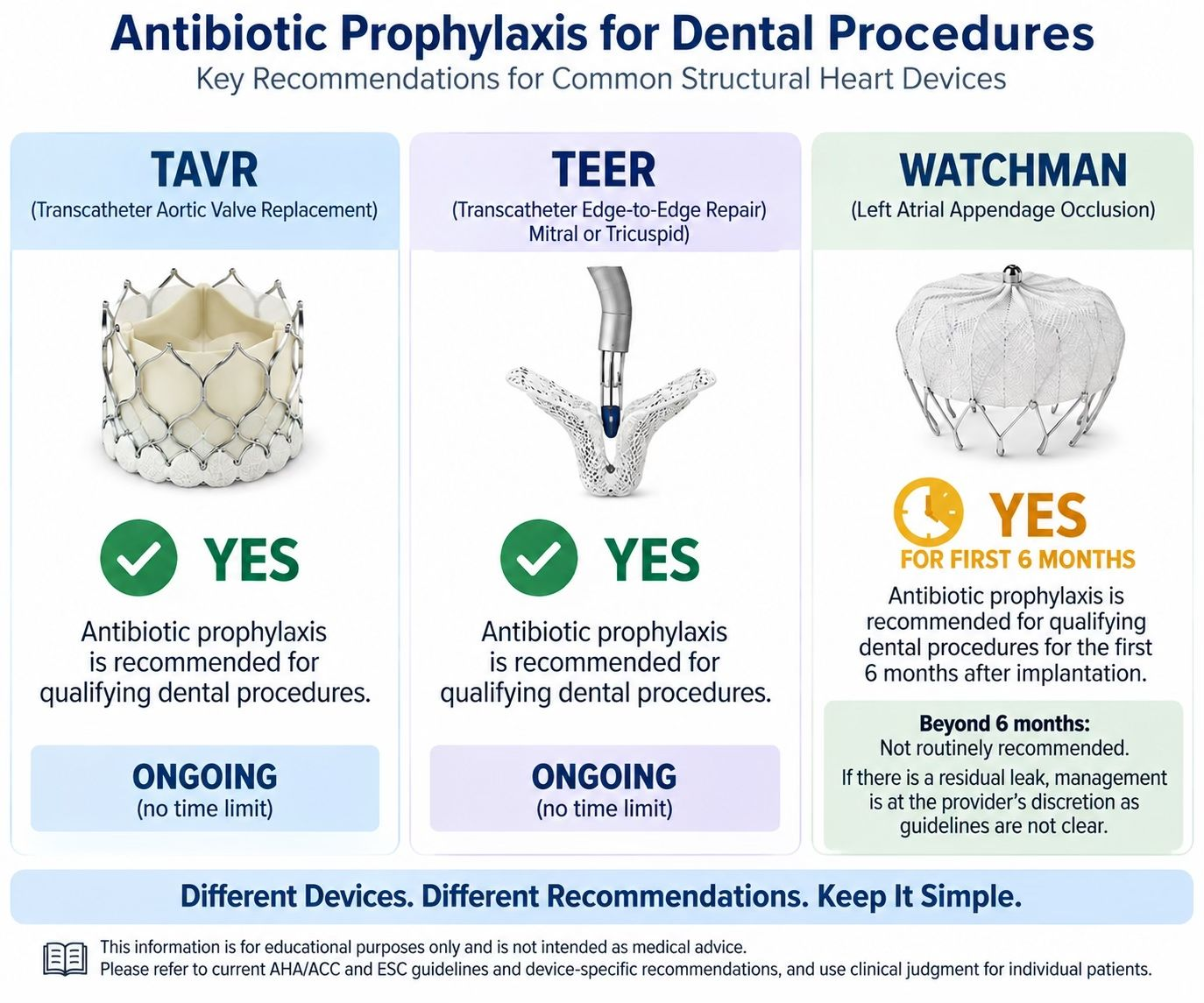
TAVR/TAVI: yes. A transcatheter prosthetic valve means dental infective endocarditis prophylaxis for qualifying procedures.
Mitral TEER: yes. Prosthetic material used for valve repair means prophylaxis.
Tricuspid TEER: yes. Same principle.
WATCHMAN: different. Left atrial appendage occlusion is not a prosthetic valve or valve repair. Device labeling recommends endocarditis prophylaxis for the first 6 months after implantation. Beyond 6 months, routine lifelong prophylaxis solely because of a WATCHMAN device is not clearly established in current guidelines.
But what if there is a residual peri-device leak? This is a gray area. A residual leak may influence antithrombotic management, but current guidelines do not clearly address whether it should extend the duration of IE prophylaxis. In these patients, prophylaxis beyond 6 months may therefore be left to clinical discretion, considering the residual leak and the individual patient's circumstances.
A practical summary:
• TAVR: ongoing prophylaxis
• Mitral TEER: ongoing prophylaxis
• Tricuspid TEER: ongoing prophylaxis
• WATCHMAN: prophylaxis for the first 6 months
• WATCHMAN with residual leak beyond 6 months: guidance is less clear; clinical discretion
As structural devices proliferate, these nuances are becoming increasingly relevant in everyday cardiology practice.
Educational purposes only; not medical advice. Please discuss further with your treating physician.
#Cardiology #StructuralHeart #TAVR #TEER #WATCHMAN #InfectiveEndocarditis
Important notice
This content is for educational purposes only and is not medical advice for any individual patient. Patients should discuss diagnosis and treatment decisions with their own physician, or request a clinical consultation.